
About

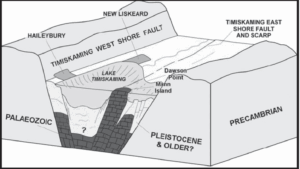
Schematic of neotectonic structures and faults in the Timiskaming–Kipawa region, including the Cross Lake and Quinze Dam faults. Credit: Geoscience Canada (UNB Journals)
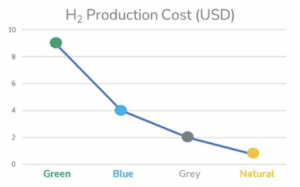
The cost of white hydrogen is one of the lowest among the various hydrogen colors. Production costs are estimated at less than 1 $/kg and decrease in a coproduction business model (geothermal energy, helium, high-value brines).
Pioneering Canada’s Natural Hydrogen Frontier
DiagnaMed Holdings Corp. is a Canadian clean-technology company focused on the discovery and production of naturally occurring geologic hydrogen also known as white hydrogen.
Our mission is to unlock a new domestic source of clean, low-cost hydrogen through advanced subsurface analytics and sustainable extraction technologies.
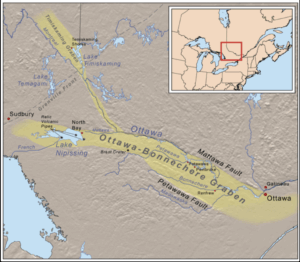
Our flagship hydrogen exploration program is located in the Timiskaming District of northern Ontario, within the Témiscamingue–Timiskaming Graben, a major structural corridor that extends across the Ontario–Québec border.
This graben is the north-westerly extension of the Ottawa–Bonnechère Graben and is defined by ancient fault zones such as the Cross Lake Fault and Quinze Dam Fault geologic features that create ideal pathways for natural hydrogen migration and accumulation.
Subsurface Hydrogen Anomalies Confirmed
In 2025, DiagnaMed launched its Ontario Natural Hydrogen & Helium Exploration Program, targeting the Timiskaming Graben for subsurface hydrogen accumulations.
Working in collaboration with Québec Innovative Materials Corp. (QIMC), the company conducted large-scale soil-gas surveys that confirmed widespread hydrogen anomalies:
- 456 soil-gas samples collected
- 209 samples > 500 ppm H₂
- Several samples > 2,000 ppm H₂
- Average ≈ 558 ppm H₂ | Median ≈ 456 ppm H₂
These findings indicate an active natural-hydrogen system within the Ontario extension of the graben.
Hydrogen is believed to migrate along deep-seated fault structures particularly beneath the Blanche River Valley and accumulate under Quaternary clay-silt cover near the surface.
Geological Framework
The Témiscamingue–Timiskaming Graben is characterized by down-faulted blocks of Precambrian basement and Paleozoic carbonate rock sequences, overlain by younger sediments.
This structure provides both the geologic source and the trapping environment necessary for hydrogen generation and containment.
The region’s structural complexity and proximity to iron-rich lithologies make it one of the most promising areas in Canada for natural-hydrogen discovery.
Our Vision
By integrating advanced subsurface discovery with clean, non-electrolytic extraction technologies, DiagnaMed Holdings Corp. is working to establish a next-generation hydrogen platform that eliminates combustion, minimizes environmental disturbance, and operates without reliance on fossil feedstocks or water electrolysis.
Our approach emphasizes modular deployment, allowing scalable production across multiple well sites and regions, and localized energy delivery that reduces transmission losses and infrastructure requirements.
This model positions DiagnaMed at the forefront of Canada’s emerging natural-hydrogen economy, leveraging domestic geology to produce hydrogen with near-zero emissions and competitive cost structures.
Our work in the Timiskaming District represents a foundational step in the creation of Canada’s Natural Hydrogen Corridor a long-term vision to connect discovery, extraction, and distribution hubs across Ontario and Québec, advancing the nation’s broader clean-energy transition and net-zero objectives.
Leveraging QIMC’s Expertise in Natural Hydrogen Exploration
By partnering with Quebec Innovative Materials Corp (QIMC), a pioneer in geologic hydrogen detection, Terravent benefits from advanced subsurface mapping, soil gas analysis, and structural geology targeting. This collaboration accelerates site identification, reduces exploration risk, and improves the success rate of hydrogen well development.